Baking is a fine art and a combination of science, and every ingredient is intended there, and even a small substitution can make a difference. One of the most debatable baking substitutions is margarine vs butter.
Despite their similarity in terms of texture and taste, the two exhibit varying reactions to heat and moisture. The first step to knowing how to make things consistent, to have a certain amount of flavour and quality, whether it be a flaky pastry, a soft cookie, or even a rich cake, is to know how to use butter and margarine in baking.
We will break down their basic difference between butter and margarine, their influences on baking, and the one that is licensed by the professionals in a legitimate kitchen.
What’s the Main Difference Between Butter and Margarine?
Butter and margarine might seem to be the same object at first sight: they are both similar, both melt in the same way, and both soften doughs. However, they are different in terms of their bottom parts and fat constructions.
Butter
Butter is a natural dairy product that is obtained by churning milk or cream until the fat and buttermilk part ways. It is usually composed of 80-82 percent milk fat, with the rest being made up of water and milk solids. It is this combination that gives butter its characteristic creamy taste, rich smell, and yellowish appearance after baking.
Margarine
What is margarine? Margarine, on the other hand, is a non-dairy product made of refined vegetable oils, which have been emulsified with water, salt, and sometimes milk solids. Modern margarine is normally fortified with vitamins and stabilisers. The texture is similar to that of butter, but its taste and melting characteristics can change dramatically depending on what kind of fat mix is used.
In short:
- Butter = dairy-based, natural flavour.
- Margarine = vegetarian, more stable, and less expensive.
Butter vs Margarine in Baking
Here is the difference between butter and margarine in baking:
| Feature | Butter | Margarine |
| Base Ingredient | Dairy (cream) | Vegetable oils |
| Fat Content | 80–82% milk fat | 70–80% plant fat (varies by brand) |
| Water Content | About 16–18% | Around 20–25% |
| Flavour | Rich, creamy, naturally aromatic | Mild or neutral, can taste slightly artificial |
| Melting Point | Lower (around 32°C) — melts faster | Higher (37–40°C) — holds shape longer |
| Texture in Baking | Adds flakiness, tenderness, and moisture | Produces denser, softer crumb |
| Shelf Life | Shorter, requires refrigeration | Longer, more stable at room temperature |
| Nutritional Profile | Contains saturated fat and vitamin A | Contains unsaturated fats and added vitamins |
| Cost | Relatively expensive | Budget-friendly alternative |
How Do Butter and Margarine Affect Baking Results?
The market of butter and margarine in India is increasing. The table butter market segment itself is projected to be approximately ₹90.35 billion in 2024 and is projected to be approximately ₹366.89 billion in 2033.
Butter and margarine seem the same in the solid form, but since they consist of fats and water, they have a substantial baking difference. The effects each of them has on your final product are as follows:
1. Texture and Crumb
- Butter: Light, tender, and flaky base of natural milk solids and fat contents. It goes well with puff pastry, pie crusts, croissants, and cookies.
- Margarine: Bakes become a bit harder and more homogeneous. It lacks the same flaky layers since it lacks the crystalline structure of butter.
Tip: Butter is superior where recipes require required to be layered and laminated (as with Danish pastries).
2. Flavour and Aroma
- Butter: Provides bakers with their natural, rich, and creamy taste. During the melting process, it releases water, which caramelises sugar to that characteristic golden-brown colour and pleasant aroma.
- Margarine: Tastes less salty. Some commercial margarines can be salty or artificially flavoured with an additive, but it is a good foods to use in recipes where the flavour is not the highlight, like base cakes or muffins.
3. Moisture and Softness
- Butter: Butter water vaporizes during baking and causes cakes and cookies to rise, but keeps them moist.
- Margarine: It has more water, and this may result in additional water in the dough, rendering the bakes softer yet less crisp.
Pro tip: Butter is the winner in recipes that require structure, such as puff pastry or shortbread. Margarine can be applied to soft-textured cakes or frostings to produce a smooth finish. You can explore techniques like these hands-on in the specialised baking workshops.
4. Stability and Shelf Life
- Butter: Its shelf life is shorter, and refrigeration should be done to avoid spoilage. It can become soft easily in warm kitchens, which can be a challenge in summer.
- Margarine: This is more stable at room temperatures and has a longer shelf life, so it is convenient in commercial bakeries and in tropical climates.
5. Health and Composition
- Butter: It is a source of natural saturated fats, cholesterol, and vitamin A; however, moderation is important because it does not fit all people.
- Margarine: It was originally developed as a healthier alternative, although the health aspect of it is determined by the manner of its production. New margarines contain no trans-fat and contain unsaturated oils such as sunflower or canola. And if you want to dive deeper into the art and technique of baking and ingredient science, the baking course offers a hands-on weekend format to learn exactly that.
Ultimate Baker’s Choice – Butter or Margarine, Which One Should You Use for Baking?
Each professional baker has a favourite, and the choice will usually be determined by the type of recipes to make, budget, and flavour objectives.
We shall see where each of them excels in the kitchen:
When to Use Butter
Use butter when you want:
- Flavour: Butter is the best when it comes to depth and aroma.
- Texture: Flaky pastries, cookies, and laminated doughs are obligatory.
- Richness: Ideal in frostings, fillings, and buttercreams.
- Colour: Provides a natural golden colour to bakes.
Best for:
- Croissants and puff pastry
- Shortcrust and pie dough
- Buttercream frostings, cookies, and pound cakes.
When to Use Margarine
Use margarine when you want:
- Stability: Predictable performance even in hot conditions.
- Affordability: Economical in manufacturing on a commercial scale
- Vegan substitutes: Can be used in plant-based and lactose-free baking.
- Tenderness: Superior in damp cakes and muffins.
Best for:
- Sponge cakes and muffins
- Biscuits or bulk commercial baking.
- Vegan and allergy-friendly desserts.
Can You Substitute One for the Other?
Yes, but with caution.
Due to their varying moisture and fat contents, they are not always 1:1 when substituting butter and margarine.
When you use margarine instead of butter, you should anticipate a slightly weaker texture and a slight decrease in flavour.
When you use butter instead of margarine, the bake will probably rise higher with a crispy finish, but will disperse more in baking sheets. Knowing how ingredients perform and exploring flavour variations can make all the difference, just like one learns in an eggless baking course focused on the science of flavour and texture.
General rule: Replace equal weights of ingredients by weight; however, decrease any added salt, should your margarine be salted. Never go straight into large quantities of recipes without first testing on a small scale to achieve professional results.
Professional Insight from Whitecaps
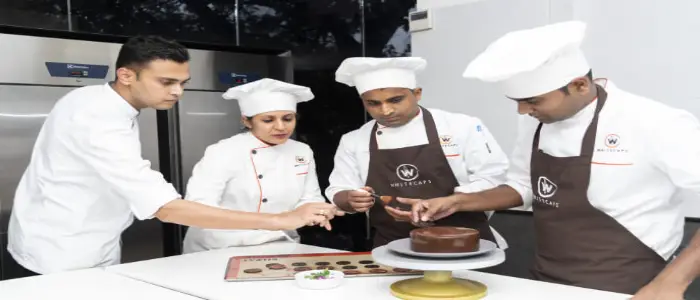
In Whitecaps International, pastry chefs instruct the students on the importance of fat quality in dough behaviour. Butter is elastic and laminated, whereas margarine is economical and stable.
In culinary and baking courses, students work with both to learn the interaction between fats and proteins of flour, sugar, and heat. It is not about picking one, but about becoming good at both.
Conclusion
It is not a question of which is better in baking: butter or margarine, but which one fits best in your recipe.
- Use butter because of its excellent flavour, smell, and feel. It suits artisan and fine bakery products.
- Use margarine due to its low cost, shelf life, and performance.
To practitioners, the science is in knowing each fat and how to exploit it. You can be making delicate puff pastries or simple tea cakes, but understanding the margarine vs butter difference will provide you with the ability to control the outcome, and that is what is the difference between a good baker and a great one. Contact us to start learning baking and achieve excellence like never before.
FAQs
- Is it possible to substitute butter with margarine when baking?
Yes, but expect a softer texture and slightly different flavour. Use equal weights for substitution, but adjust salt levels if using salted margarine.
- Which is healthier: butter or margarine?
Margarine made with unsaturated oils can be a lighter option, but quality matters. Butter is natural but higher in saturated fat. Moderation is key for both.
- Why do cookies made with butter spread more?
Butter melts faster due to its lower melting point, causing dough to spread more during baking. Margarine holds its shape longer, leading to thicker cookies.
- Is margarine suitable for laminated doughs like croissants?
It can be used in commercial bakeries with high-fat margarine, but butter remains the gold standard for flavour and texture.
- What’s the best fat for beginners in baking?
Butter is easier to work with for flavour and consistency. However, margarine is a practical option for budget-friendly or vegan baking.
- Can I mix butter and margarine in one recipe?
Absolutely. Many commercial bakers blend both to achieve balance, butter for flavour and margarine for structure and stability.
- Does the type of fat affect shelf life?
Yes. Baked goods made with margarine typically last longer because of its higher water stability and lower spoilage rate.