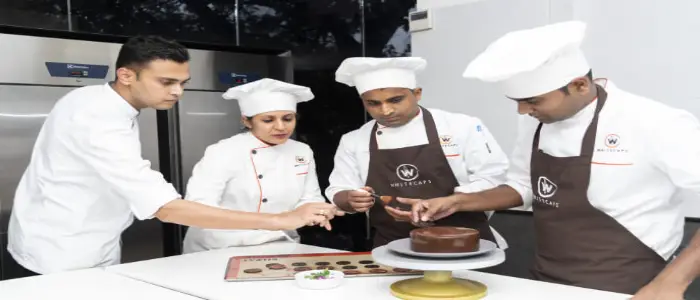
In pastry and baking, one becomes more skilled by practising. Although certificates and training are important, the most critical indicator of the student journey is his or her student portfolio. A baking portfolio is a place where learning, practice, creativity, and progress are combined. It enables the students to show in a visual manner what they have studied and how their skills have developed over time.
Portfolio building is not regarded as an independent activity at professional institutes such as Whitecaps International School of Pastry. Instead, it is an organic process of learning. Each project, evaluation, and practical session contributes value to the portfolio of a student and makes him or her feel confident in their skills.
What Is a Baking Portfolio and Why Does It Matter?
A baking portfolio is a well-organized body of work that the student does during training. It typically contains pictures of the baked goods, the project results, and the chosen evaluation work.
The bakery industry in India is developing rapidly and has turned into a large market. It is estimated to be valued at approximately 13.8 billion in 2024, and in the coming years, it is projected to surpass 31 billion as demand keeps growing.
To students, an e-portfolio assists in several ways. It demonstrates practical skills, outlines advantages and records developments between simple methods and sophisticated works. It also enables students to know how they are growing and be more confident about their learning process. A portfolio provides a straightforward and graphical means of documenting practical experience in the future.
Types of Portfolio Items Students Create in Baking School
In a professional baking programme, the students are engaged in a great variety of practical activities. These automatically become portfolio pieces.
1. Practical Baking Projects
These contain ordinary classwork like breads, cookies, cakes, pastries, and desserts. Every project denotes technical knowledge, precision, and experience.
2. Themed or Signature Creations
They are commonly done by students as themed desserts, or signature dishes like celebration cake, plated dessert or festive bake. These works are creative, design-conscious, and personal.
3. Examination and Assessment Work
Practical tests and assessments are a significant component of a baking portfolio. These are the materials that demonstrate the independent performance in terms of following directions and schedules.
4. Chocolate and Sugar Work
Most of the advanced classes cover chocolate tempering, moulding, decorations and sugar work. These visual descriptions create great depth to a chef portfolio, especially for students training through an Artisan Chocolate Making Course, where presentation and craftsmanship matter just as much as technique.
5. Menu Planning and Concept Work
Specific programmes have dessert menus or bakery ideas as coursework. These are planning skills in show, flavour balance and presentation thinking.
How Students Build Their Baking Portfolio in Baking School
Portfolio building occurs in stages, and it is accompanied by normal learning. Here are some ways that are important to consider when creating a student portfolio:
1. Baking projects
Every practical session is concerned with particular techniques. Students focus on process following, ingredient knowledge, and finishing. These projects are ultimately the basis of the baking portfolio, giving learners real-world confidence to showcase their eggless baking skills in any professional or personal setting.
2. Photo capturing their creations
Students are made to document their work by using simple photography techniques. The use of natural light, clean backgrounds and clear angles aids in displaying texture, colour and details. There is no need for professional cameras, but consistency is important.
3. Recording Progress Over Time
There is no difference between early and advanced projects. To demonstrate progress in learning, many students incorporate beginner-level tasks. This assists in manifesting progress and rising self-confidence.
4. Including Exam and Evaluation Pieces
Evaluation work brings order and authenticity to a digital portfolio for students. These compositions emphasize discipline, time management and self-application of skills.
5. Organising the Portfolio Clearly
Learners are taught to organize their work logically. Indian culinary portfolios can be sorted by breads, cakes, pastries or by stages of a course. The portfolio is easy to comprehend due to clear organisation.
How Baking Schools Help Students Build Their Portfolio
Recent figures show that student enrolment in pastry courses at different culinary institutes has grown by more than 30 percent over the past three years. This is driven by a vast and growing bakery industry valued at USD 12-13.8 billion, rising popularity of skilled professionals in bakery, like vegan and gluten-free baking, and a good historical track record in major institutions like Whitecaps, which underscores the necessity of trained bakery chefs. Professional baking schools are essential in helping students develop Indian culinary portfolios.
- Organized curriculum guarantees exposure to different baking methods.
- Frequent practical classes offer regular portfolio content.
- Faculty response assists students in better execution and presentation.
- Examinations and tests provide credible portfolio material.
- Presentation guidance assists the students in the selection and refining of work.
At the best Baking Institute in Bangalore, learning is interwoven with student chef portfolio building. Learners build up a balanced portfolio of work at a gradual pace without being overwhelmed.
Common Mistakes Students Should Avoid
The students occasionally commit preventable errors when creating a baking portfolio. Knowing them will contribute to clarity and balance.
- Putting on too many of the same things rather than being diverse.
- Poorly lit or unclear photographs.
- Omission of simple projects displaying core competencies.
- Failure to organize the portfolio in a clear order.
- Looking at the results and omitting the learning processes.
A good portfolio is a symbol of not only perfection but also growth and technique.
Why Photos Matter in a Student Portfolio
One of the most significant components of a baking portfolio is photographs. They assist in capturing information that words fail to capture.
Good portfolio photographs must:
- Definitely demonstrate texture and structure.
- Emphasize decoration and finishing.
- Use plain backgrounds and adequate lighting.
- Be stylistically consistent and framed.
By learning basic food photography at the baking workshop in Bangalore, students have the ability to showcase their work without fear, helping them build confidence in presenting their creations to the world and even use those photos to grow their personal brand or business.
Conclusion
A baking portfolio is a significant document of learning, practice, and development. Students will create a robust student portfolio through projects, photographs, and assessments, which will demonstrate both ability and commitment.
Portfolio building is an enjoyable aspect of baking when guided appropriately. At Whitecaps International, learners are advised to look at each bake as a lesson and each entry in their portfolio as a step in the right direction. Contact us to start your course right away.
FAQs
- Do all baking students need a portfolio?
Yes. A portfolio helps showcase practical skills and learning, especially for professional opportunities.
- Do students need professional cameras for portfolio photos?
No. Clear photos using a phone and good lighting are more than enough.
- What should a beginner include in their portfolio?
Basic breads, cakes, pastries, and early learning projects are essential starting points.
- How often should students update their portfolio?
Ideally, after every major project or assessment.
- Does Whitecaps help students with portfolio building?
Yes. Portfolio development is part of the learning process across courses at Whitecaps.