Do you get drawn into the smell of something freshly baked? Perhaps you’ve seen videos of the yummy cookies, the soft cakes and crusty loaves, collected a few dozen recipes and still didn’t know where to start.
When each recipe is accompanied by its own techniques, measurements and oven settings, beginning from scratch can seem intimidating. You don’t have to get fancy equipment or be professionally trained to get started.
In your own kitchen, you can learn the basics with a few essentials and a simple recipe, and with a little patience, eventually improve your confidence with each bake.
What Do You Need to Start Baking at Home?
Don’t have to load your kitchen up with fancy tools before your initial bake. Always focus on the fundamentals and build it up as you feel comfortable.
Essential Equipment
- Oven: You’ll need a good oven that gets the proper temperature.
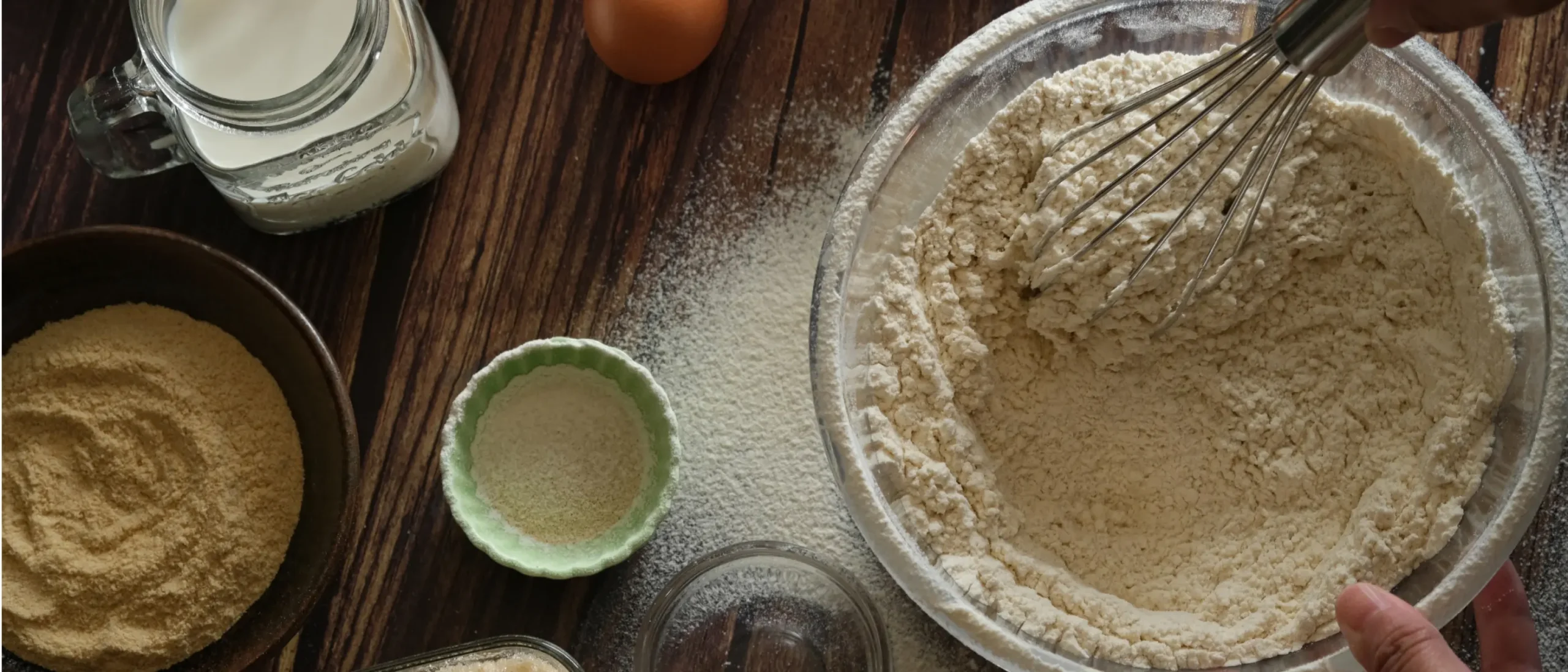
- Mixing Bowls: Store at least two mixing bowls, one for dry and one for wet ingredients.
- Measuring Tools: A digital kitchen scale, measuring cups, and spoons are helpful for staying on track.
- Whisk & Spatula: Whisk to mix; spatula to fold and scrape.
- Baking Tins: All you need are the basic baking tins such as a cake tin, muffin tin or baking tray.
- Cooling Rack: Easy to bake on; won’t get soggy on the bottom.
Basic Ingredients
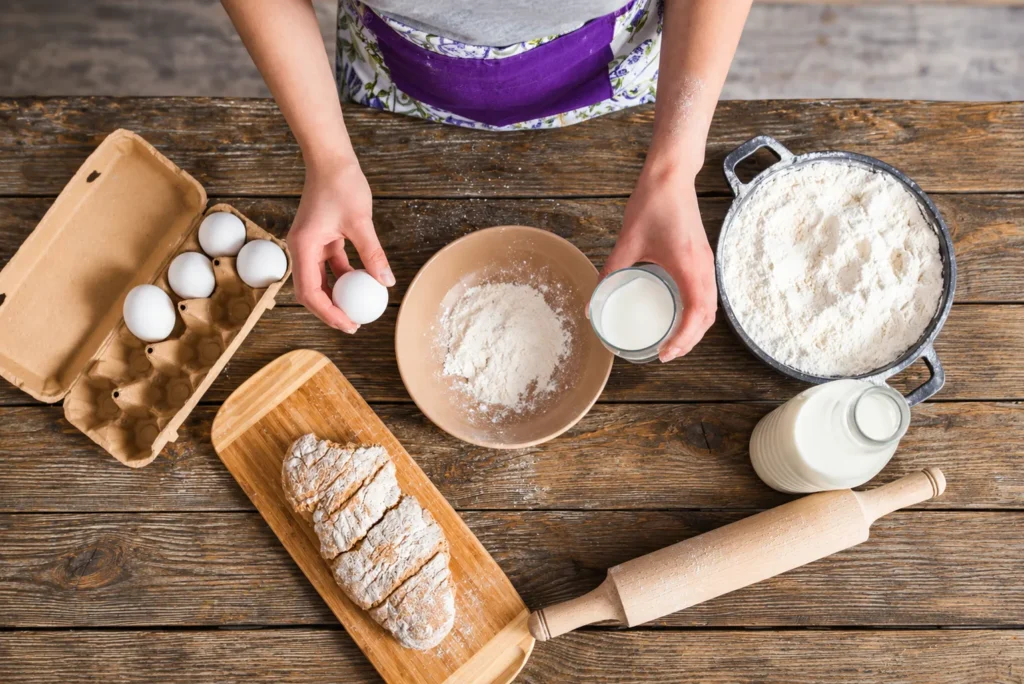
Keep your pantry simple at first: flour, sugar, eggs, butter or oil, milk, salt and baking powder or baking soda. After you have mastered some recipes, you can introduce ingredients like cocoa, vanilla, chocolate, nuts and dried fruits.
5 Practical Tips to Begin Baking at Home
1. Begin with a basic recipe
Try a cookie, muffin, brownie or a basic sponge cake as your first few bakes. They will let you try out measuring, mixing, and judging the doneness without the added burden of handling a complicated technique.
2. Measure the flours with a scale
Use a kitchen scale if available. Scooping flour straight from the package may condense the flour, resulting in less than the desired amount, causing cakes and cookies to be dry and dense.
3. Bring Ingredients to the Temperature the recipe requires
When a recipe calls for room temperature butter or eggs, do not use what has just come out of the refrigerator. When you combine ingredients at incorrect temperatures, it can affect the mixture, especially when mixing butter and sugar.
4. Do not continue mixing after adding the Flour.
After adding flour to batter, stir only until dry bits are no longer present unless the recipe specifies otherwise. Excessive mixing can form the gluten in the dough and result in tougher than desired cakes, muffins, etc.
5. Preheat Before Baking & Avoid Opening the Door
Allow the oven to preheat to the proper temperature before inserting the batter. Avoid opening the door repeatedly while the bake is rising, as the temperature drop can affect its structure; check for doneness closer to the recommended baking time.
For many, home baking starts as a hobby, but it can grow into something more. The Indian bakery market is estimated at USD 16.40 billion in 2026, with small-scale home baking contributing around USD 500 million.
Common Mistakes Beginners Make While Baking
- Adding extra flour or sugar can throw off the texture, so weigh your ingredients with a weighing scale.
- Please be sure to preheat the oven to the recipe temperature.
- Stop mixing once the flour is incorporated to avoid a dense or tough texture.
- Avoid opening the oven door once the bake has begun to rise so as not to drastically change the temperature.
- Do not randomly change ingredients, because different ingredients can act very differently in the baking process.
Don’t lose heart if your first bake doesn’t turn out right; even an eggless cake can come out dry despite following the recipe, and that’s simply part of learning.
Take Your Passion Beyond Saved Recipes With Whitecaps
If you are looking for some answers as to why a cake rises, what makes chocolate do that, and how to take an idea from something awesome to something awesome for sale, it’s time to start taking baking seriously.
With hands-on studies in cakes, pastry, chocolate and desserts and artisan bread, that’s what the Excellence Diploma Program (EDP) at Whitecaps brings to you. It provides the depth you might expect from a diploma in baking, along with exposure to costing, branding, and entrepreneurship.
One example of where that journey can take our alumni is Nigiel Laloo, whose story is a baking success story from Shillong. After joining the programme, he went on to build his own bakery in Shillong, Brewed by Willie.
That may manifest itself in many different ways, but the concept is straightforward: unlock your passion from behind a screen. Discover the skills, practise and find out where it takes you.
From Your First Bake to Something Bigger
Taking the first steps to start baking from scratch at home is as easy as picking a recipe and trying it out.
It’s possible that your first cake won’t rise properly or your cookies won’t come out as well as you hope, but each time you bake, you will learn something new.
As that joy may turn into a career goal one day, it can be cultivated through a structured and hands-on approach at Whitecaps International School of Pastry.
If you are an individual who wants to start baking or work in the best baking institute in India, Whitecaps can help you take your passion to the next level.
FAQs
1. Which bake is best for a first attempt?
For beginners, cookies, muffins and brownies are straightforward alternatives that use basic ingredients and techniques.
2. Do I need an expensive oven to start baking?
No, as all you need is a good home oven that also has a good heat regulator.
3. Why is weighing ingredients important in baking?
Using the correct measurements will ensure the correct proportions of ingredients and the desired result.
4. How long does it take to learn baking at home?
Basic recipes will be mastered in just a few tries, and advanced recipes will require practice.
5. Why does my cake become dense after baking?
Dense cakes may be caused by overmixing, wrong measuring or not enough leavening.
6. Can I learn baking without professional training?
Yes, it is possible to learn some basic baking in a home setting, though receiving training in a structured environment can offer a way to practice and gain knowledge about technique.
7. What is a diploma in baking?
A diploma in baking is an adult learning program led by a professional in baking techniques, equipment and related skills.
8. What can I learn in a pastry and bakery course?
Some courses in pastry and bakery might consist of cakes, breads, pastries, desserts, chocolate work and professional baking techniques.
9. Is Whitecaps International School of Pastry suitable for beginners?
Yes, the Excellence Diploma Program offers in-depth and practical instruction to anyone seeking to master the world of professional baking and pastry.
10. Can home baking become a career?
Yes, you can follow baking as a career or business through consistent practice and professional training.