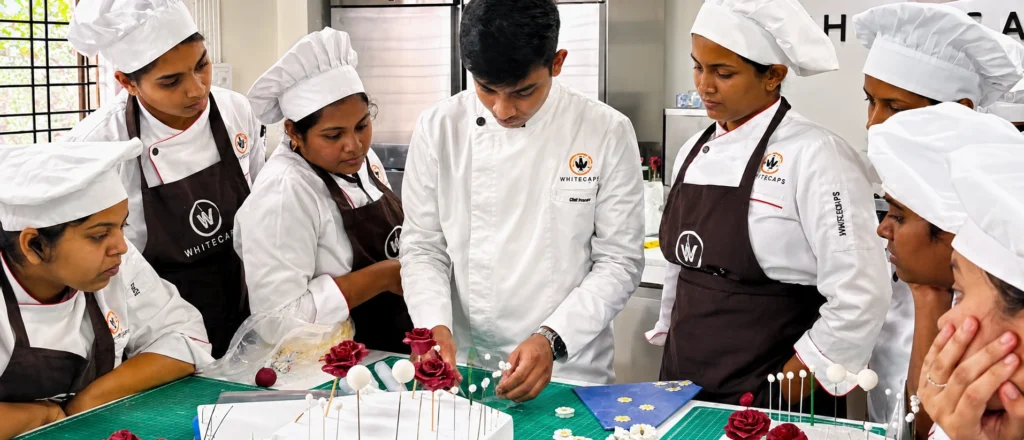
Not every baking reel reflects what actually happens inside a professional kitchen. While the finished pastries and cakes may look effortless, there is a great deal of planning, organization, and teamwork behind every product that reaches a customer.
Professional kitchens follow structured processes to ensure consistency, maintain hygiene standards, and meet daily production requirements without compromising quality.
For many aspiring bakers, stepping into a professional kitchen offers a completely different perspective on the craft.
It helps them understand how commercial bakeries operate, how teams work together, and what is expected from professionals in a real-world baking environment.
What Is a Professional Kitchen Environment?
A professional kitchen environment is a commercial workspace designed for large-scale food production, quality control, and food safety. It combines skilled teams, specialized equipment, and standardized processes to ensure consistent results. Key characteristics of a professional kitchen environment include:
- Defined roles and responsibilities for kitchen staff.
- Dedicated workstations for preparation, baking, and finishing.
- Commercial-grade equipment built for high-volume production.
- Standardized recipes and workflows to maintain consistency.
- Strict hygiene, sanitation, and food safety practices.
- Organized storage and inventory management systems.
- Clear communication and coordination between team members.
Commercial kitchen cleaning plays a critical role in maintaining food safety and operational efficiency.
Why Baking Students Need to Learn Professional Kitchen Operations
Learning professional kitchen operations helps baking students understand the standards, responsibilities, and workflows followed in commercial baking environments. Key reasons baking students should learn professional kitchen operations include:
- Develops time management, organization, and workplace discipline.
- Teaches food safety, hygiene, and quality control practices.
- Builds confidence through hands-on baking experience.
- Familiarizes students with commercial baking equipment and processes.
- Improves consistency in baking and pastry production.
- Strengthens teamwork and communication in kitchen environments.
- Prepares students for internships, placements, and professional baking careers.
These are just a few examples of why baking courses are a perfect career path after graduation.
How Professional Kitchens Differ from Home Baking Setups
Professional kitchens are designed for large-scale production, unlike home baking, which focuses on smaller batches and personal preferences. Key differences include:
- Larger production volumes and tighter schedules.
- Commercial equipment with higher output and precision.
- Standardized recipes to ensure consistent results.
- Dedicated workstations for different baking tasks.
- Strict food safety, hygiene, and quality control practices.
- Team-based operations instead of individual baking.
- Inventory management and ingredient cost control.
- Structured workflows to improve efficiency and reduce errors.
8 Key Lessons Every Baking Student Learns in a Professional Kitchen
Professional kitchen training exposes students to real bakery operations and workplace expectations. These experiences help them build the skills needed to succeed in commercial baking environments.
1. Time Management
Professional kitchens operate on strict schedules, making time management an essential skill for baking students. From preparing ingredients to monitoring baking times, every task must be completed within a specific timeframe. Students learn how to plan their work efficiently, prioritize tasks, and avoid delays that can affect production. These skills help them meet deadlines while maintaining consistency and quality in commercial baking environments.
2. Workstation Organization
An organized workstation is the foundation of an efficient professional kitchen. Students learn how to arrange ingredients, tools, and equipment so that everything is easily accessible during production. Good organization reduces unnecessary movement, minimizes mistakes, and helps maintain a smooth workflow. Over time, students understand how proper workstation management contributes to productivity, hygiene, and overall kitchen efficiency.
3. Recipe Accuracy
In commercial baking, consistency is just as important as creativity. Students learn the importance of following recipes, measurements, and preparation methods with precision. Even small changes in ingredient quantities or baking times can affect the final product. By developing accuracy and attention to detail, students gain the ability to produce reliable results that meet professional quality standards.
4. Food Safety and Hygiene
Food safety is a key responsibility in every professional kitchen. Students learn proper sanitation practices, ingredient storage methods, and safe food handling procedures that help prevent contamination. They also understand the importance of maintaining clean workspaces and following hygiene protocols throughout the baking process. These practices are essential for ensuring product quality and consumer safety.
5. Commercial Equipment Handling
Professional kitchens use specialized equipment that is designed for large-scale production. Students gain practical experience working with commercial ovens, mixers, proofers, refrigerators, and other bakery tools. They learn how to operate equipment safely, use it effectively, and maintain it correctly. This hands-on exposure helps students become comfortable working in real bakery and pastry kitchen environments.
6. Team Coordination
Professional baking is rarely a one-person operation. Students learn how to communicate effectively, coordinate tasks, and work alongside chefs and fellow bakers to achieve production goals. They also develop an understanding and workplace accountability. Strong teamwork helps kitchens operate smoothly and ensures products are completed efficiently and on time.
7. Quality Control
Maintaining consistent quality is a major part of professional baking operations. Students learn how to evaluate products based on appearance, texture, taste, and presentation before they are served or sold. They also understand how to identify and correct common issues that may affect product quality. This attention to detail helps ensure customer expectations are met consistently.
8. Handling Production Pressure
Professional kitchens can become extremely busy during peak production periods. Students learn how to remain focused, manage multiple tasks, and adapt to changing priorities without compromising quality. Exposure to these situations helps build confidence and resilience over time. Learning to perform effectively under pressure is an important skill for long-term success in the baking industry.
The skills you learn in a professional baking course extend far beyond recipes and techniques.
What Challenges Do Baking Students Learn to Handle in a Professional Kitchen?
A professional kitchen setting allows students to experience the demands of the baking industry firsthand. Along the way, they may encounter challenges, including:
- Managing multiple baking tasks within strict timelines.
- Maintaining consistency across large batches of products.
- Ensuring cleanliness and food safety requirements are consistently met.
- Coordinating with team members during production hours.
- Operating commercial baking equipment safely and efficiently.
- Responding to unexpected production or workflow issues.
How Professional Kitchen Training Benefits Future Bakers
Professional kitchen training gives baking students practical experience and prepares them for real-world bakery careers. Key benefits of professional kitchen training include:
- Builds confidence in commercial bakery environments.
- Strengthens baking and pastry production skills.
- Improves time management and workplace efficiency.
- Teaches industry-standard food safety practices.
- Provides hands-on experience with commercial equipment.
- Prepares students for internships and bakery placements.
- Supports future entrepreneurship and bakery ownership.
A career in baking continues to create opportunities for skilled professionals across bakeries, hotels, cafes, and food businesses.
What Should Students Look for in a Professional Baking Training Kitchen in India?
A professional baking training kitchen should provide students with hands-on learning and exposure to real bakery operations. Before enrolling, look for the following:
- Industry-standard baking and pastry equipment for hands-on training.
- Practical learning in a professional bakery environment.
- Experienced chef instructors with real-world industry expertise.
- Strong emphasis on food safety, hygiene, and kitchen best practices.
- Internship, placement, and career-focused training opportunities.
Conclusion
Professional kitchen training helps students develop the habits, skills, and confidence needed to succeed in the baking industry. It also provides practical exposure that no classroom lesson can fully replicate.
At Whitecaps International School of Pastry, students gain hands-on exposure to professional kitchen environments that reflect real industry practices.
This practical approach helps aspiring bakers develop confidence, strengthen their technical abilities, and prepare for opportunities in bakeries, hotels, pastry kitchens, and food businesses across India and beyond.
FAQs
1. What is a professional kitchen environment in baking?
A professional kitchen environment is a commercial workspace designed for efficient baking, food safety, and consistent product quality.
2. Why is professional kitchen training important for baking students?
It helps students gain practical experience and understand how commercial bakeries operate on a daily basis.
3. What practical skills can students develop in a professional baking kitchen?
Students learn time management, food safety, equipment handling, teamwork, and quality control.
4. How is a professional kitchen different from a home baking setup?
Professional kitchens use commercial equipment, standardized processes, and team-based operations for larger production volumes.
5. Do baking courses include hands-on kitchen training?
Many professional baking courses include practical kitchen sessions to help students apply their learning in real-world settings.
6. What equipment do students use during professional baking training?
Students typically work with commercial ovens, mixers, proofers, refrigerators, and other bakery equipment.
7. How does professional kitchen experience improve bakery career opportunities?
It prepares students for internships, placements, and entry-level roles in bakeries, hotels, and pastry kitchens.
8. What challenges do baking students face in professional kitchens?
Common challenges include managing deadlines, maintaining consistency, following hygiene standards, and coordinating with teams.
9. What factors should students consider when choosing a baking institute in India?
Students should evaluate the quality of hands-on training, faculty expertise, modern kitchen infrastructure, and the availability of career guidance or placement assistance.
10. Does professional kitchen training prepare students to launch their own bakery?
Yes, professional kitchen training helps students build baking expertise, understand day-to-day bakery operations, and gain practical experience that can support their entrepreneurial goals.