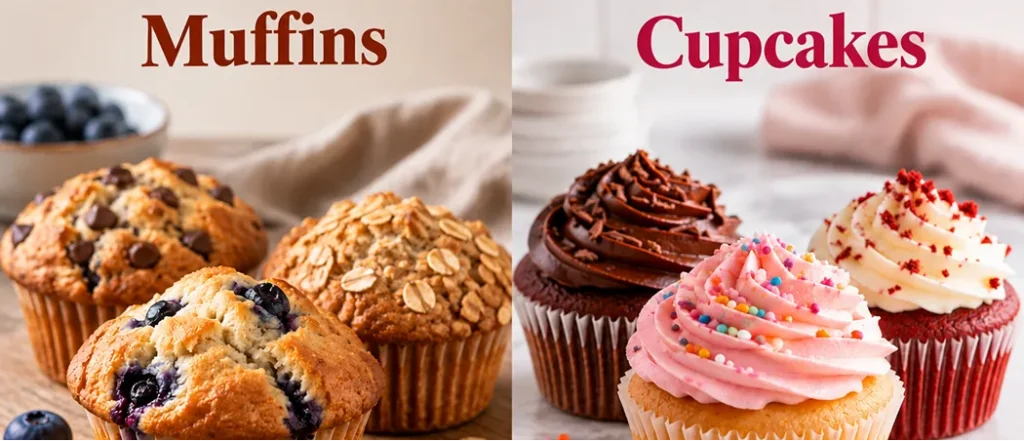
The words muffins and cupcakes are often used interchangeably, and who doesn’t see why? They look quite similar, come in individual portions and can even share some of the same ingredients. However, after a bite, you will realize the difference.
The flavor and even the texture and method of preparation may vary significantly. This is a good rule of thumb to follow: muffins are less sweet and tend to be denser; cupcakes are less dense and more dessert-like, with a big frosting!
Really, what are the differences between the two? Let’s look at the distinctions between a muffin and a cupcake.
Muffin vs Cupcake: Key Differences
| Aspect | Muffin | Cupcake |
| Ingredients | Flour, eggs, milk, fat, sugar and leavening agents, often with fruits, nuts or chocolate. | Flour, eggs, milk, butter, sugar and leavening agents. |
| Sugar | Less sweet with a milder taste. | Sweeter and richer. |
| Mixing | Wet and dry ingredients are mixed briefly. | Butter and sugar are often creamed first. |
| Texture | Moist, dense and slightly crumbly. | Light, soft and fluffy. |
| Toppings | May have fruit, nuts, crumbs or glaze. | Usually topped with frosting or icing. |
| Purpose | Commonly eaten as a snack. | Usually enjoyed as a dessert or celebration treat. |
If you’re planning to bake either at home, knowing the difference is only half the job; avoiding common baking mistakes can make all the difference to how your muffins or cupcakes turn out.
What Is a Muffin?
The muffin is a small, individual baked good, typically smaller and less sweet than a cupcake. Fruits, nuts, oats or chocolate chips are often added directly to the mixture, providing a bit more crunch to each bite. One thing people love about these muffins is the lack of frosting required to make them complete – unlike cupcakes.
Ingredients in a Muffin
-
Flour
The flour is the foundation of your muffin and will provide the structure needed to help maintain the shape. All-purpose flour is regularly used, but if the recipe calls for it, other flour types (such as whole wheat) can be used.
-
Eggs
Eggs act as a glue and help keep ingredients together and provide moisture and structure. They also help provide a soft bite to a freshly baked muffin.
-
Milk
Milk contributes moisture to the batter and also contributes to making it tender. Buttermilk can also be substituted, depending on the desired texture and taste.
-
Butter or Oil
This quality is what prevents your muffins from drying out. Butter adds a richer flavour, while oil can give you a softer texture.
-
Sugar
Sugar is used to add sweetness to the muffin, but in most cases not to the same degree as it would in a cupcake. It also promotes browning and assists in the texture of the muffin.
-
Leavening Agents
Baking powder or baking soda helps your muffins rise as they bake. It’s all about balance here; don’t overdo it, or it may impact the flavor and consistency of the muffin.
-
Fruits, Nuts or Other Add-ins
This is where you can have a little fun with muffins. The batter can be flavoured and textured with blueberries, bananas, nuts, oats and chocolate chips.
What Is a Cupcake?
Imagine a cupcake is a little cake for you. It has a softer crumb, a sweeter flavour and a lighter bite than a muffin, making it feel much more like a dessert. The frosting is usually the final icing; the true icing on the cake is where you can get creative with flavours, colours and decorations.
Ingredients in a Cupcake
-
Flour
Flour gives the cupcake its structure, but the goal here is a fine, tender crumb rather than the more substantial texture you get from a muffin.
-
Eggs
Eggs add richness to the batter and help give cupcakes their smooth, delicate texture. They also help the finished cake hold together without becoming dense.
-
Butter
Butter brings the richness that you expect from a cupcake. When it is creamed with sugar, it also helps create the lightness that makes each bite feel more cake-like.
-
Sugar
Cupcakes are typically sweeter than muffins, and sugar is a big part of that difference. It also contributes to the soft crumb and golden finish you see after baking.
-
Milk
Milk helps create a smooth, pourable batter and keeps the finished cupcake tender. It also works well with the richness of butter and eggs.
-
Leavening Agents
Baking powder or baking soda gives the batter enough lift to rise in the oven, helping you get the light, airy crumb that cupcakes are known for.
-
Frosting and Decorations
This is where cupcakes get their signature finish. Buttercream, cream cheese frosting, chocolate, sprinkles and other toppings can completely change the flavour and appearance of the same basic cupcake.
Why Are Muffins and Cupcakes Made for Different Occasions?
Pick up a muffin for a quick snack. This goes with coffee or tea, and is good when you’re looking for something simple to eat. For birthdays, parties or celebrations, pick a cupcake. The sweet taste, frosting and decorative finish are better for dessert tables and special occasions.
Muffins are also a popular choice, with the India muffins market accounting for USD 560.3 million in revenue in 2024 and projected to reach USD 768.8 million in 2030.
Are Muffins Healthier Than Cupcakes?
Not necessarily. Although a muffin can be made with less sugar and add fruit or oats or nuts, this doesn’t necessarily make the muffin a healthier option. Some muffins are loaded with sugar, butter, chocolate or sweet toppings, and they can be almost as indulgent as cupcakes.
The same applies to cupcakes; their nutritional value is determined by the recipe, the size and the topping. Now, rather than judging by the name on the label, check out the actual list of the one being consumed.
Muffin vs Cupcake: Which One Should You Choose?
Well, it depends on your mood, really. However, a muffin might be a better choice if you are looking to enjoy it with a coffee, as a snack with a milder taste
For birthdays, parties or a sweeter treat, go for a cupcake , and with 38% of families worldwide serving cupcakes at children’s birthday parties, they clearly have a place on the celebration table.
If you are preparing baked goods at home, consider what baked good experience you are looking for: basic and simple, sweet and celebratory? It makes the decision pretty simple.
Learn Professional Baking with Whitecaps
The Excellence Diploma Program (EDP) is a practical path at Whitecaps International School of Pastry for cultivating and advancing your skills if you are looking to make baking your career.
The course takes 6 months and comprises baking and patisserie, chocolate, artisan bread, cakes and French pastries, with lots of practising and mentoring from the chef.
It is a perfect balance for someone who wants to do a diploma course in baking and pastry which does more than explain recipes and also instills understanding of costing, food photography, as well as branding and entrepreneurship.
Explore Noseno’s inspiring journey from EDP alumna to a successful entrepreneur, and see how her experience at Whitecaps helped shape her path in the baking industry.
Final Word
Muffins and cupcakes have a number of common ingredients, but it’s how they’re cooked, what they are, the sweetness and the usage that differentiate them.
Having read about them may have made you more serious about baking; consider the professional training offered through Whitecaps International School of Pastry’s EDP.
Whitecaps is a destination where baking and pastry are taught hands-on for those aspiring to join the best baking institute in Bangalore.
FAQs
1. What is the main difference between a muffin and a cupcake?
Muffins tend to be dense and less sweet, while cupcakes are lighter and sweeter, often topped with frosting.
2. Are muffins healthier than cupcakes?
No, the nutritional quality varies according to the recipe and ingredients that are used in the dish, the quantity of servings we eat, and any toppings.
3. What ingredients are commonly used in muffins?
Muffins typically contain flour, eggs, milk, butter or oil, sugar and leavening agents, along with add-ins such as fruits, nuts or chocolate.
4. Why are cupcakes sweeter than muffins?
Cupcakes tend to be sweeter by using more sugar, and they often have sweet frostings, making them dessert-oriented.
5. What is a diploma in baking and pastry?
A Diploma in Baking and Pastry is a professional course that focuses on baking, pastry-making and practical application.
6. What is an advanced baking course?
An advanced baking course can be a furtherance of basic skills and may include artisan bread, advanced pastry, chocolate work, and professional cake preparation.
7. Is Whitecaps International School of Pastry suitable for aspiring pastry chefs?
Yes, our programmes, including our Excellence Diploma Program, provide hands-on professional baking and pastry training.
8. What does a professional cake making course teach?
In a professional cake making class, learners can be taught the preparation, decoration and finishing techniques and other skills required in commercial baking.
9. Can muffins be had as a snack?
Yes, muffins are commonly enjoyed as a snack, particularly when made with ingredients such as fruits, nuts or oats.
10. Where can I study baking in Bangalore?
Whitecaps International School of Pastry offers baking and pastry courses for students who are looking into professional baking education in Bangalore.